GEO and Internal Linking
Internal links help Google AI Overviews and ChatGPT find your pages. Three checks from crawls of four sites: orphan pages, related-guide links and menus.

Do internal links help with GEO?
Yes. Internal linking belongs in your AI search strategy for the same reason it belongs in SEO: internal links help search engines and AI tools find your content and give readers a way to explore related questions. No study has yet shown that adding internal links earns more AI citations.
But where should you focus? A site can have thousands of internal links and still leave its most useful articles buried in archives. A large menu does little to help someone reading a pool-filter guide find the article that explains which filter material to choose.
Crawls of four websites showed the same problems. Older articles were hard to reach, related guides had few links between them, and many links still pointed to URLs that had moved.
This guide explains where internal linking fits in generative engine optimization (GEO), what the research tells us, three internal linking checks for AI search, and the basics that matter for any search engine.
Where internal links fit in GEO
GEO describes the work of helping your content appear in AI-generated answers. That might mean a supporting link in Google AI Overviews or AI Mode, or a citation in ChatGPT search or Deep Research. Each product has its own way of finding and using sources.
Internal links connect pages on your website. They help search engines discover those pages, explain how the topics relate, and give visitors a useful next step. The same link can serve all three purposes.
- Discovery. A crawler only reaches a page through a link, or the sitemap. The old guide has neither link nor context.
- Understanding. The anchor text “filter glass” tells crawlers and models what the target page is about.
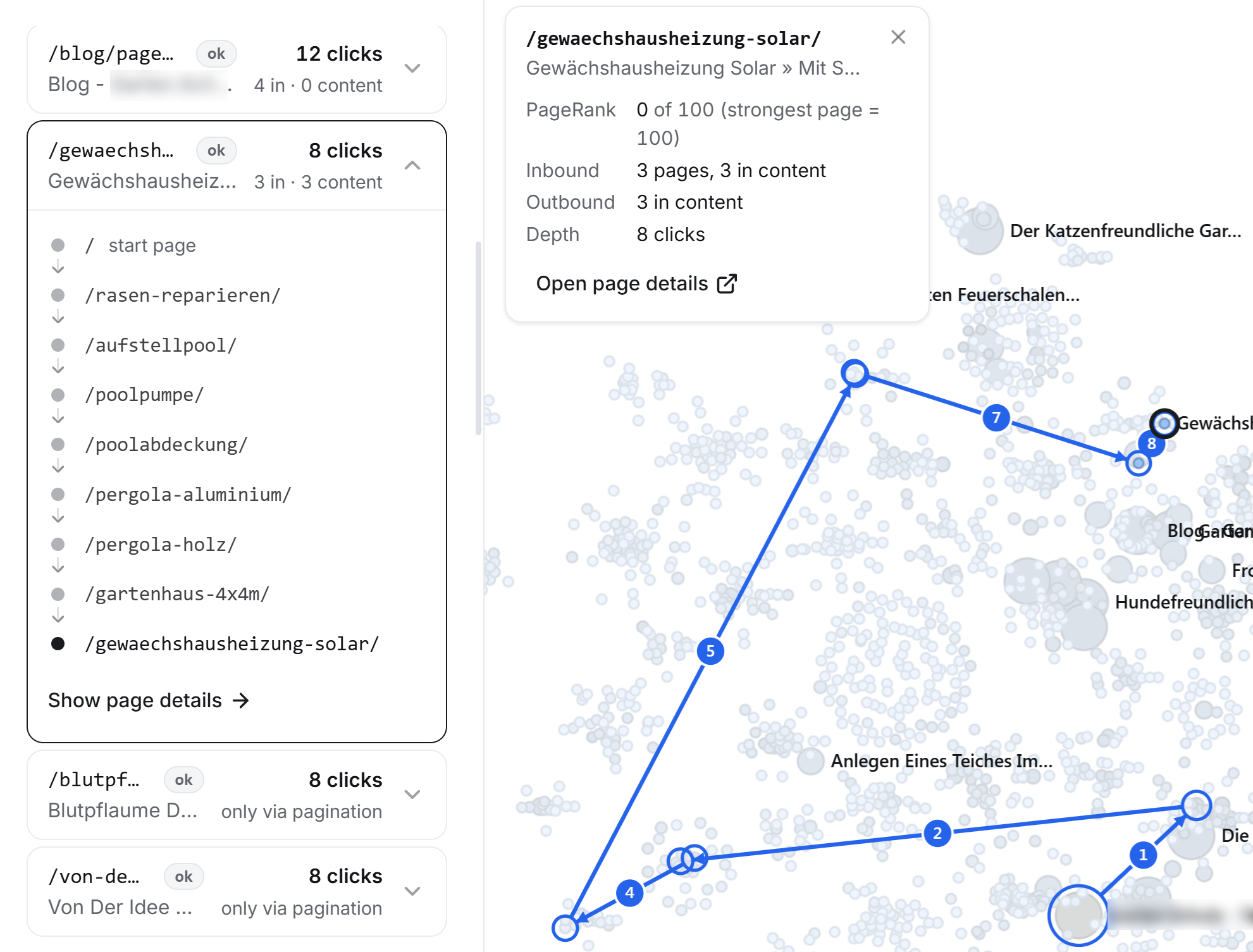
- 1Live retrieval. An agent moves link by link, choosing each next step: start page, category, article, target.
Google includes internal linking in its guidance for AI features. To appear as a supporting link, a page needs to be indexed and eligible for a search snippet. Google says the usual SEO fundamentals apply, with no additional AI optimization required.
So start with the content you already have. If an important guide is difficult to find, improving the links to it is a practical part of preparing your site for AI search.
What research says about internal links and AI citations
Google gives us a clear recommendation. Research into browsing agents gives us examples of how links are used. Neither tells us how many extra AI citations a new internal link will earn.
| Source | Main finding | What it means for your site |
|---|---|---|
| Google's AI search documentation | Google recommends making content findable through internal links. | Include internal linking in your SEO work for AI Overviews and AI Mode. |
| Google's link guidelines | Crawlable links and descriptive anchors help Google discover and understand pages. | Check that links can be followed and that their wording describes the destination. |
| Peec AI's Deep Research observations | In its June 2026 sample, Deep Research followed internal links to find more information. | Connect related guides so a browsing agent can continue its research on your site. |
Carolyn Shelby makes a similar case: many apparent AI visibility gains come from fixing technical SEO problems that have been neglected for years. Weak internal links, confusing site structure and inaccessible content are familiar examples.
The caution is about the promise attached to the work. Lily Ray's endorsement of Pedro Dias's critique of GEO claims reflects that wider concern. These sources support improving discovery and navigation, but do not establish a predictable increase in citations from adding links.
How AI tools find and follow your content
A search result can be the starting point
An AI tool may arrive directly at an article through a search result. It does not have to start at your homepage and work through every category. Because AI tools can enter through search, a page eight clicks from the homepage may still be found.
Once a browsing agent reaches that article, internal links can help it find details the page does not cover. In Peec AI's study, researchers recorded Deep Research sessions across more than ten accounts, with roughly twenty requests per account. They observed the agent following internal links when it needed more information.
They also found that large navigation blocks early in the HTML could take up much of a capped text read, leaving less room for the article. The order of the HTML mattered even when the menu appeared elsewhere on screen. This was an observation from the sampled Deep Research sessions; other tools may read pages differently.
Build each article so it makes sense on its own, then link to related material where more detail would help. Someone arriving from search should be able to get an answer and see where to go next.
Three internal linking checks for AI search
Start with a topic that matters to your business. Choose its main guide, category page and supporting articles, then use the following checks to see how well they connect.
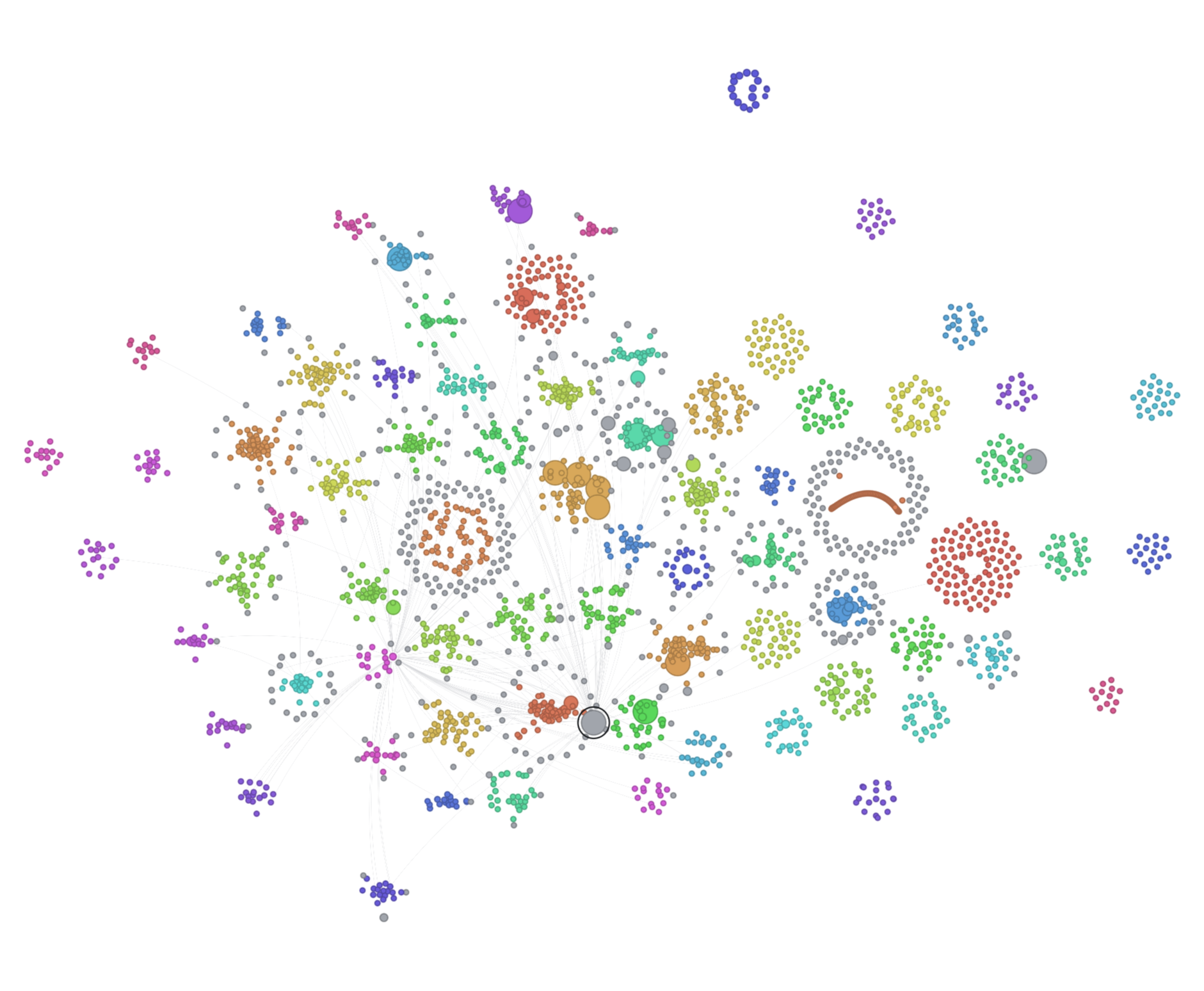
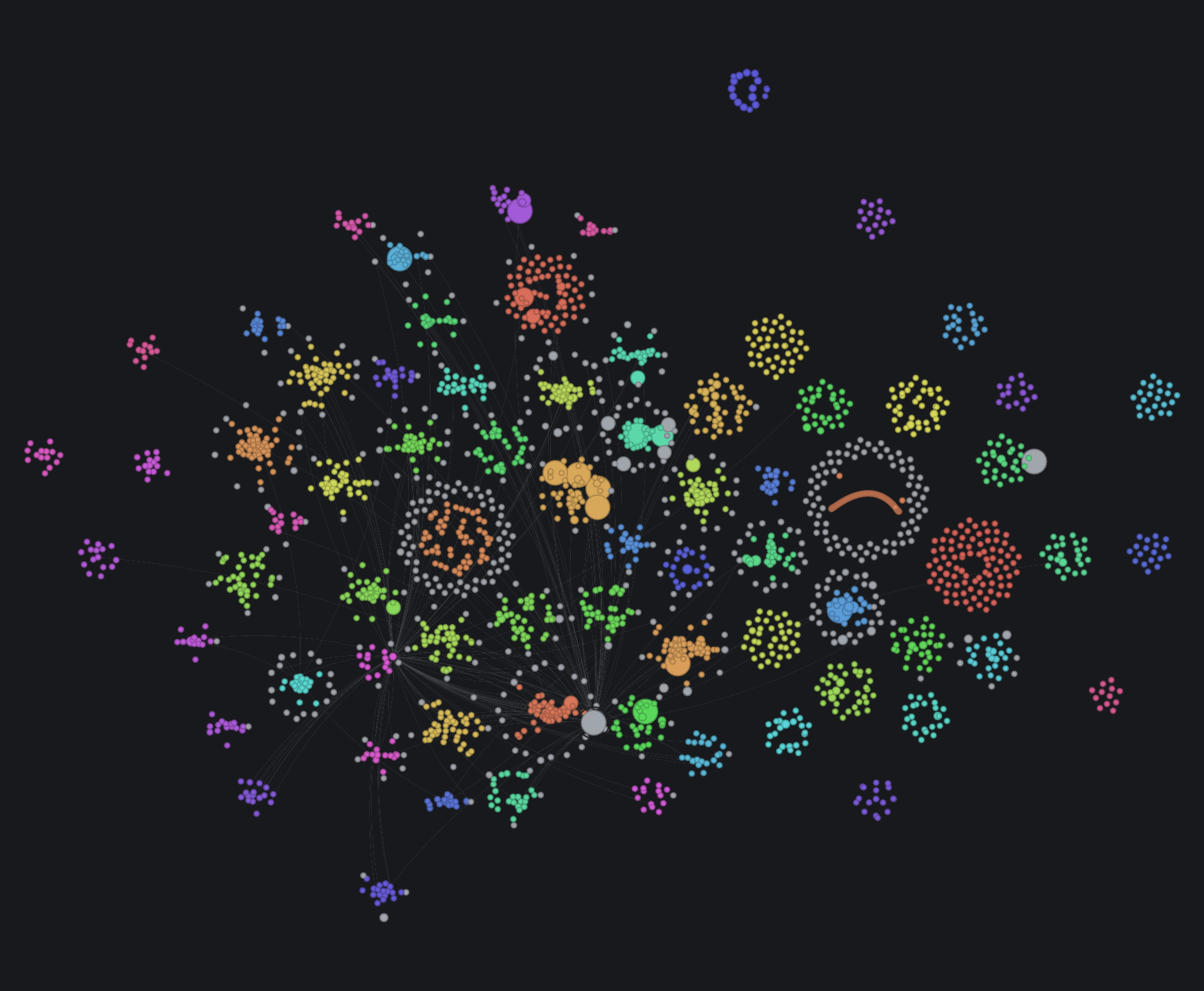
The examples below come from our crawls of four sites in September and October 2026: a German lifestyle magazine with about 18,000 indexable pages, a German gardening magazine with 2,200, a British gardening magazine with 1,800, and a German online shop with 1,000. We counted indexable HTML pages, excluding homepages and paginated listings. The screenshots show the German gardening site. These are site-structure findings; we did not measure changes in AI citations.
1. Find orphan and under-linked articles
Compare the URLs in your crawl with your sitemap and CMS. If you only look at pages the crawler reached by following links, you can miss orphan pages, the articles with no links pointing to them.
On the British gardening magazine, 382 of 1,841 indexable articles (21%) appeared in the sitemap but had no incoming links from the pages we crawled. Most were older seasonal advice, show reports and promotions.
Next, look at links within the main content separately from menus and footers. An article might be linked from the navigation but never recommended in a related guide. On the two gardening magazines, 37% and 42% of articles received at most one link from another page's main content.
Content links are the route a browsing agent can take. An AI tool that reaches a related guide from search continues through the links in that guide, so an article that no guide links to cannot be reached that way.
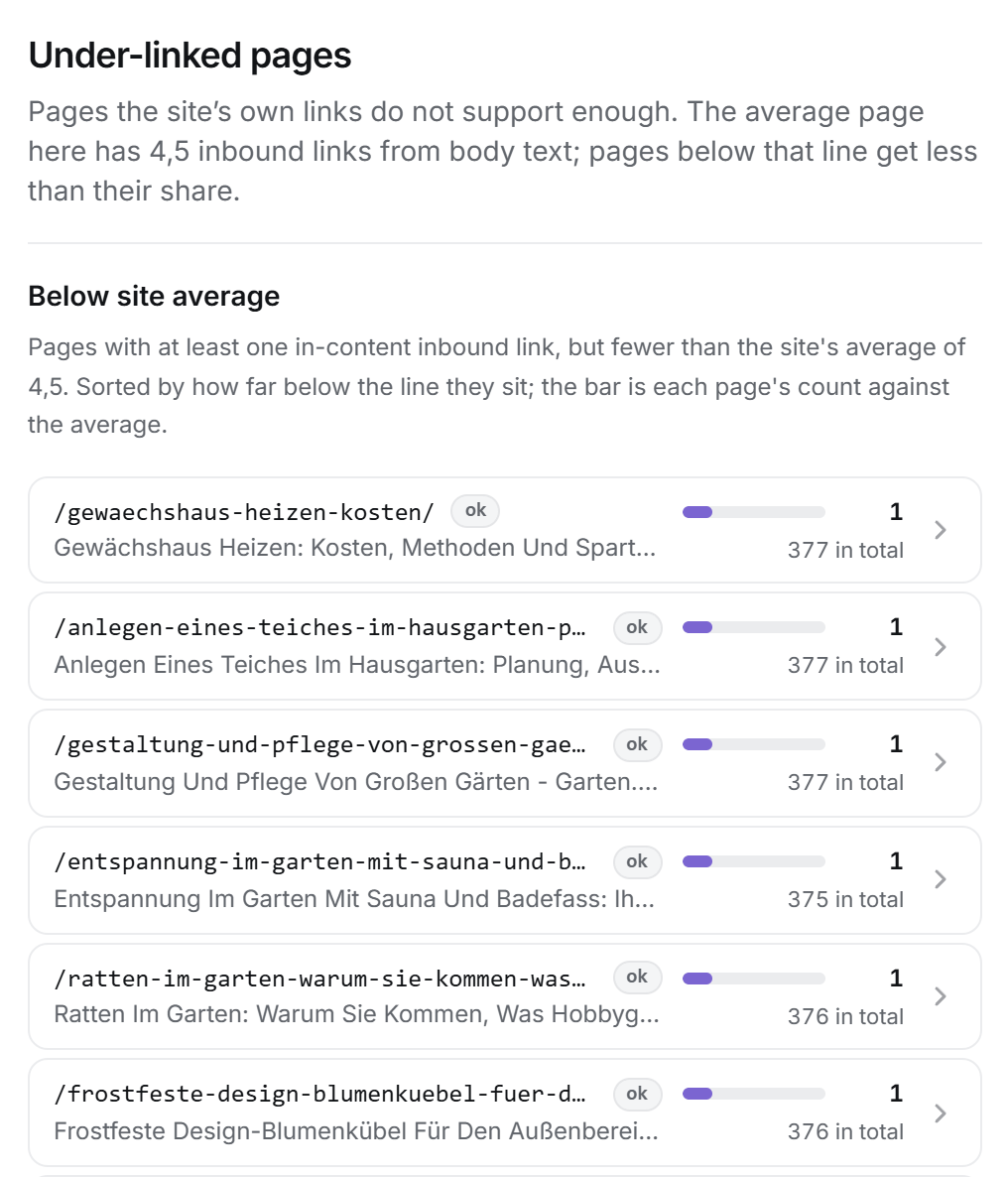
Pick an article you want more people to find. Look for existing pages that discuss its subject and add a link where it would answer a reader's next question. The appropriate number of links will depend on the topic and the content available to support it.
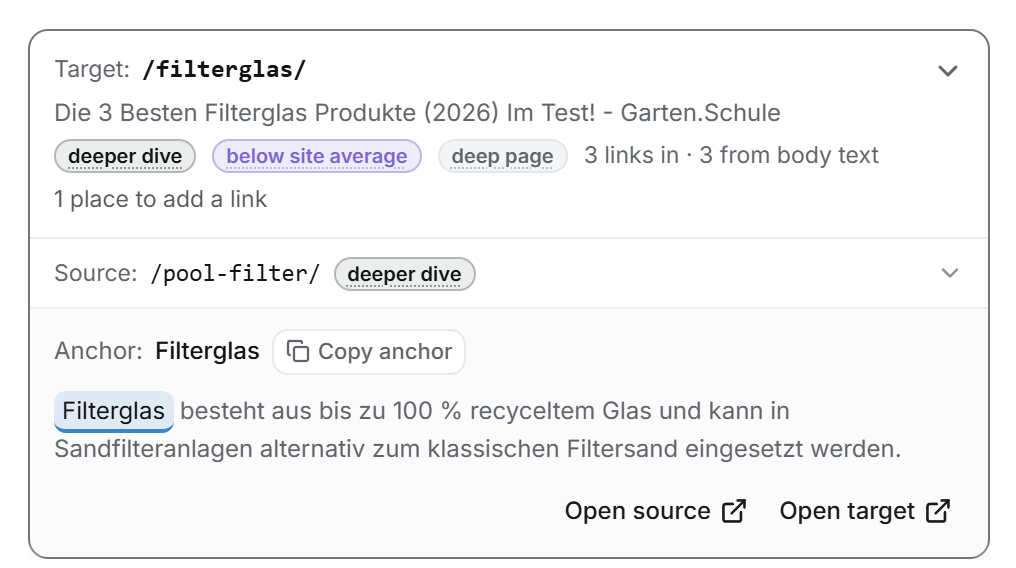
For example, a guide to pool filters is a useful place to link to an article about filter glass. The reader is already considering filter materials, so the link fits the decision they are trying to make.
2. Connect guides around the questions readers ask
Think about the questions someone will ask as they work through a topic. A pool-filter overview, a comparison of filter materials and a tutorial on replacing the material each answer a different question. They also give you natural reasons to link between the pages.
Link the overview to the comparison, then link the comparison to the replacement tutorial where you explain maintenance. Each article should answer its own question clearly and make the next step easy to find.
AI tools often split one question into several related searches, a process called query fan-out. Veruska Anconitano's query fan-out guide describes internal links as supporting infrastructure whose role varies across AI systems. A guide that links to the next question gives a browsing agent a route to that answer on your site.
If two articles cover essentially the same question, review their scope. Giving them distinct purposes, or merging them, may be more useful than adding more links.
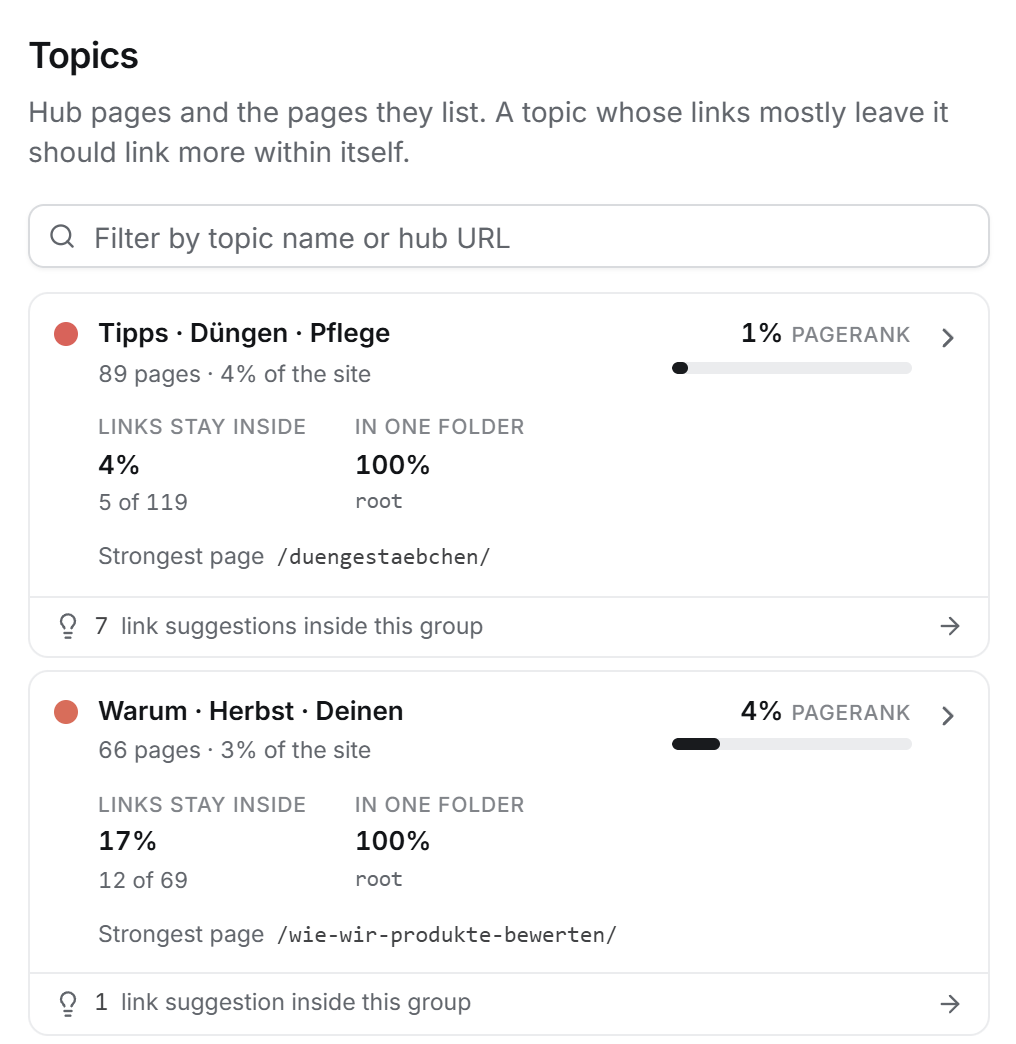
Links across categories can be useful, too. Judge each connection by whether it helps the reader explore the subject. The share of links within a group helps you find places to investigate, but there is no ideal percentage to target.
3. Trim oversized navigation menus
Menus, category pages and breadcrumbs help people navigate the site. Links within articles help them explore the subject they are reading about. Review both when you audit internal linking, because a large menu can hide how few connections exist within the content itself.
For AI tools, menu size has a second cost. In Peec AI's Deep Research sessions, navigation placed early in the HTML used much of a capped text read, leaving less room for the article.
On our four sites, 71 to 85% of internal links came from menus, footers and other repeated blocks. Main-content links accounted for 9 to 28%. An average page on the lifestyle magazine linked to 128 internal destinations, with only 15 in its main content.
If your menu lists hundreds of destinations on every page, consider which choices visitors need at that point. Broad categories can sit in the main navigation, with more specific links on the relevant category pages. Also check how much navigation appears before the article in the HTML.
Jan Willem Bobbink reported better Google and ChatGPT performance after removing most links from an oversized global menu and placing subcategory links in relevant categories. Bobbink's result is one reported case, so it cannot tell us how much of the improvement came from the menu change alone.
Test the proposed navigation on mobile and with a keyboard. Important pages should still be easy to reach. Removing links is only useful if the resulting structure serves visitors better.
The basics: click depth, anchor text and redirects
Google says the usual SEO fundamentals apply to its AI features. Click depth, anchor text and redirects are part of those fundamentals. They matter for AI search because they affect how pages are crawled and indexed, not for a reason specific to AI. Our guide to internal linking basics covers each check in detail. Here is what the four crawls showed.
Click depth
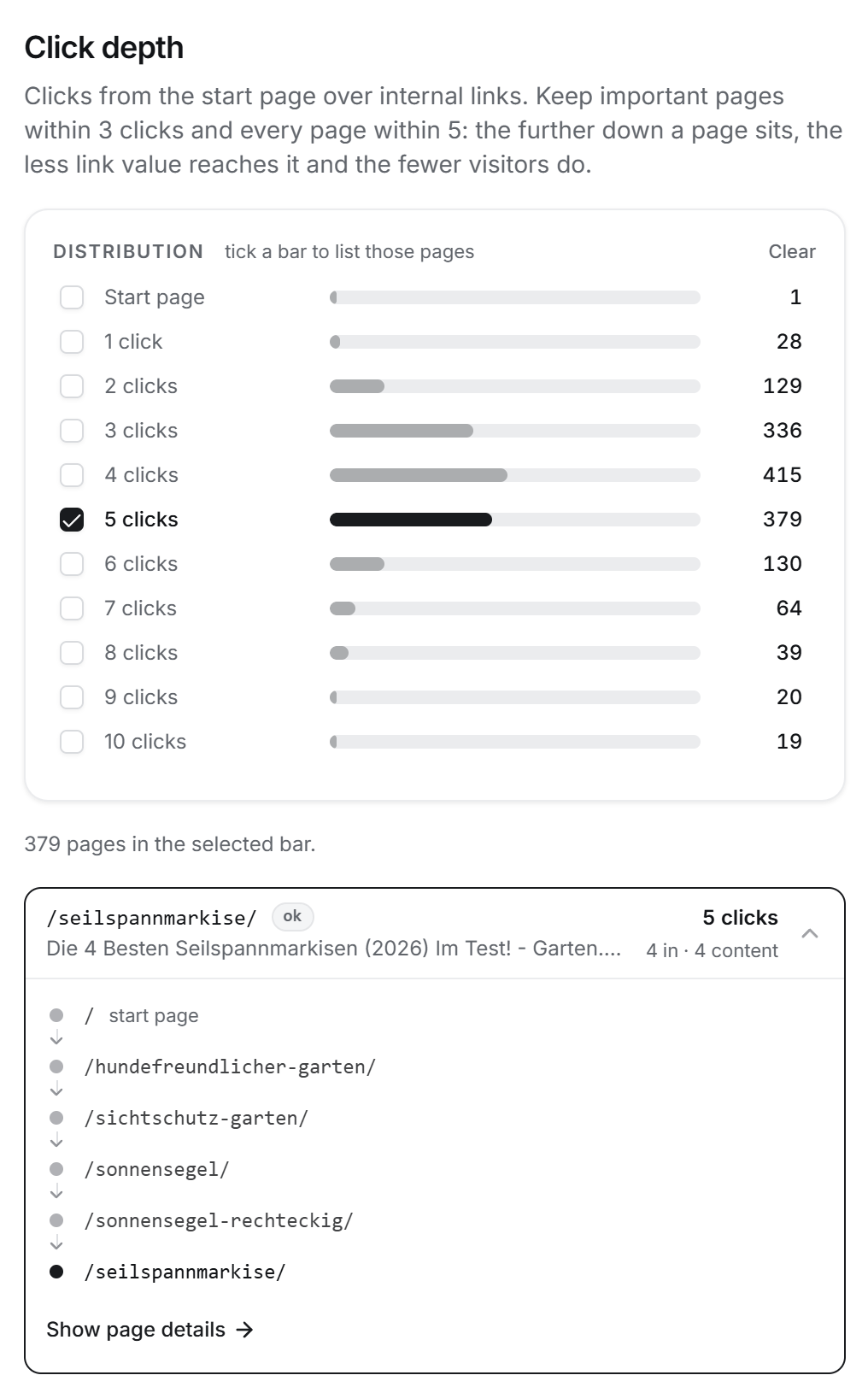
On the German gardening magazine, 78% of articles were more than three clicks from the homepage, and 39% could only be reached through archive pagination. On the lifestyle magazine, those figures were 43% and 15%. The online shop's category structure kept 96% of its pages within three clicks.
Review priority pages more than three clicks from the homepage. A link from a page at depth one brings the destination to depth two.
Anchor text
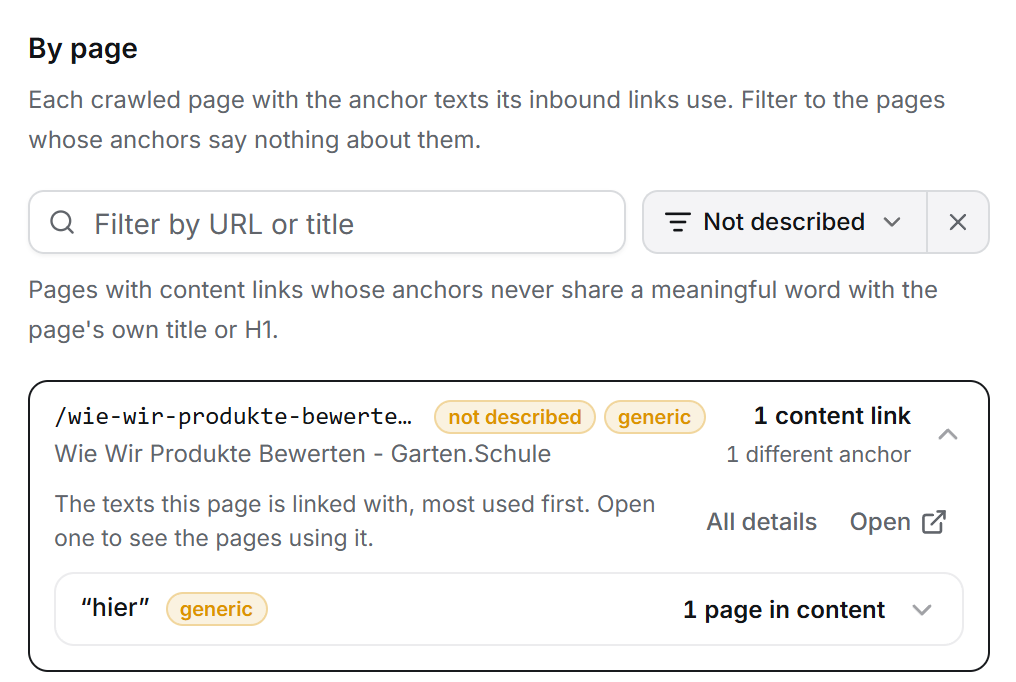
Generic phrases such as “read more”, “here” and “hier” accounted for less than 1% of content anchors on each site. Missing anchor text was the larger problem. On the German gardening magazine, 1,704 content links (15%) had no anchor text, mostly because they were linked images without alt text.
Broken links and redirects
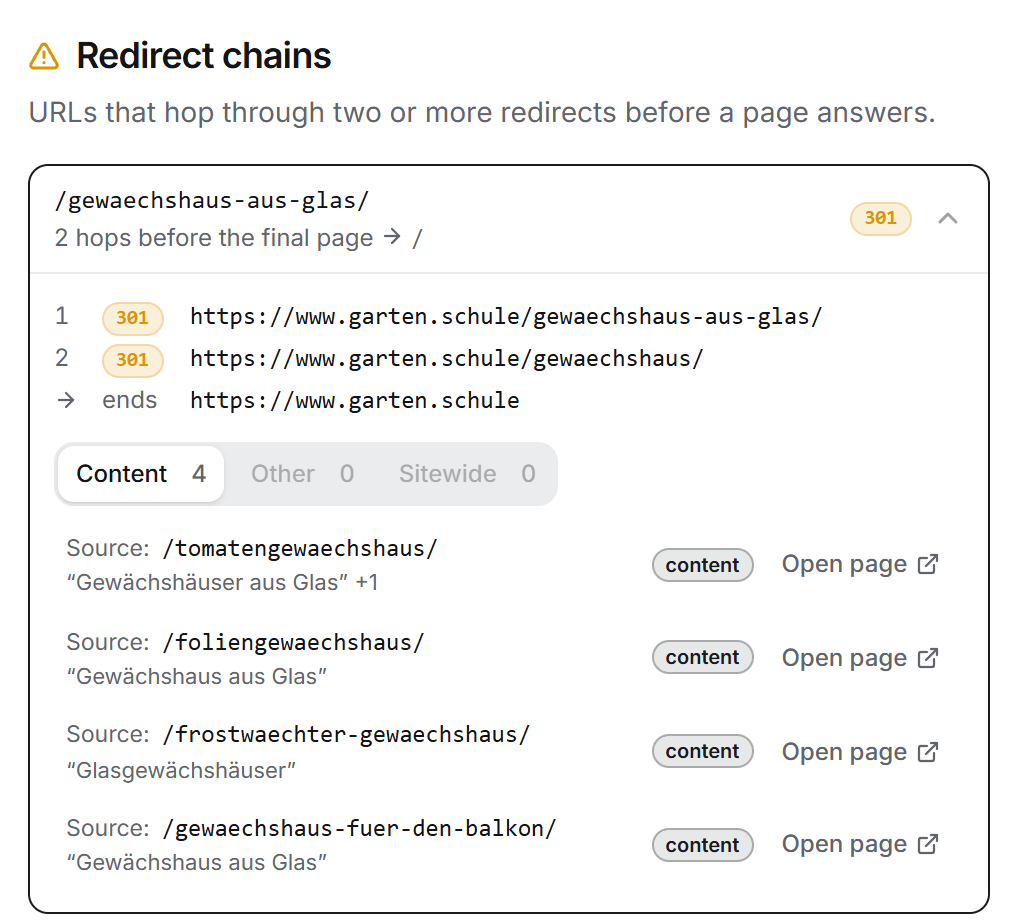
On the lifestyle magazine, 36% of indexable pages had at least one content link that went through a redirect. On each gardening magazine, it was about one page in ten. Update each of those links to point directly to its final destination.
- Important articles receive links from relevant content.
- Related guides connect around the questions readers ask.
- Menus are easy to use on mobile and with a keyboard.
- Priority pages are easy to reach from a guide or category.
- Anchor text describes the linked page.
- Links point directly to the intended destination.
Summary: internal linking for GEO
Internal links help Google and AI tools that browse the web find your content, and they help readers move between related questions. Google lists internal linking in its guidance for AI features and says the usual SEO fundamentals apply. No study has shown that adding internal links earns more AI citations.
AI tools often arrive at an article from search, not from your homepage. In Peec AI's sample, ChatGPT Deep Research then followed internal links to find more detail, and large menus early in the HTML used up much of what it read.
Three internal linking checks follow from that: find orphan and under-linked articles, connect guides around the questions readers ask, and trim oversized navigation menus. Click depth, descriptive anchor text and links that skip redirects matter for AI search as part of the usual SEO basics.
After the changes, recrawl the site to confirm them. To track AI visibility, ask the same questions in the same tools over several weeks and look for a pattern rather than a single new citation.
Sources
- AI features and your website, Google Search Central.
- Link best practices for Google, Google Search Central.
- Most AI visibility gains are just technical debt repayment, Carolyn Shelby, Search Engine Land, August 13, 2026.
- How ChatGPT Deep Research reads your site: What the logs reveal, David Konitzny, Peec AI, June 22, 2026.
- Query fan-out optimization guide, Veruska Anconitano, Search Engine Land, updated April 21, 2026.
- Removing excessive internal links, Jan Willem Bobbink, LinkedIn.
- Endorsing Pedro Dias's critique of GEO claims, Lily Ray, LinkedIn.